
Healthcare-Focused Emergency Response
BLS Training for Nurses
Build the CPR, AED, airway, and team-response skills nurses need to respond quickly and effectively during life-threatening emergencies. This course page is designed for nurses and healthcare professionals seeking structured Basic Life Support skills training.
Basic Life Support Skills for Healthcare Environments
Healthcare emergencies require more than knowing the individual steps of CPR. Nurses may need to recognize deterioration, call for help, begin compressions, manage airway support, apply an AED or defibrillator as appropriate to the setting, coordinate with other responders, and provide a concise handoff when additional clinical support arrives.
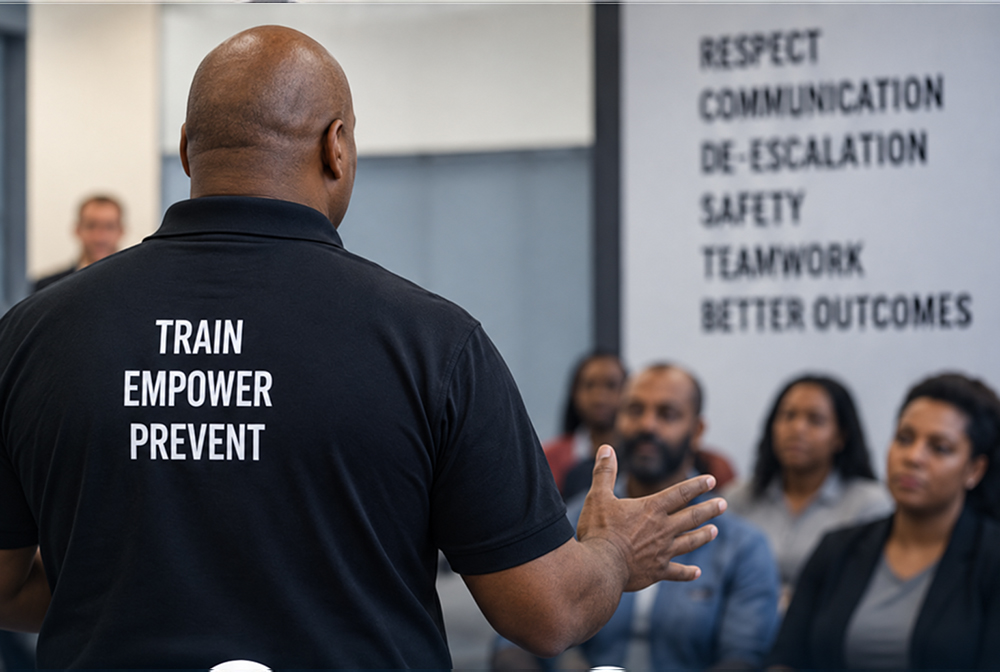
Safer Tomorrows BLS-focused training reinforces a systematic response to cardiac arrest and other immediately life-threatening situations. Instruction can include demonstration, coached practice, scenario work, and team-based drills so participants can connect technical skills with communication and role clarity.
Designed For
- Registered nurses and licensed practical/vocational nurses
- Nursing students and new graduates
- Healthcare support staff
- Residential and direct-care professionals
- Clinical teams requiring BLS-level skills
- Organizations arranging group refresher training
What Participants Practice
Training focuses on high-quality response fundamentals and the ability to work effectively as part of a healthcare team.
- Scene safety and rapid assessment
- Recognition of cardiac arrest
- Adult, child, and infant CPR concepts
- High-quality chest compressions
- Ventilation and barrier-device concepts
- AED use and safety
- Relief of choking and airway obstruction
- Two-rescuer and team response
- Clear communication and role assignment
- Handoff to advanced responders
From Individual Skill to Coordinated Response
Recognition
Participants practice identifying when a person is unresponsive, not breathing normally, or showing signs that require immediate escalation.
High-Quality CPR
Emphasis is placed on correct hand position, appropriate compression technique, minimizing unnecessary interruptions, and maintaining organized care.
AED Integration
Participants learn how an AED fits into the response sequence, including pad placement concepts, clearing the patient, following prompts, and resuming CPR promptly.
Team Dynamics
Healthcare response improves when roles are assigned clearly. Scenarios reinforce concise communication, closed-loop confirmation, and coordinated transitions between tasks.
Hands-On, Practical & Relevant
Learn
Review the purpose and sequence of BLS interventions and the reasoning behind rapid response.
Practice
Use guided repetitions and instructor feedback to improve technique, confidence, and consistency.
Apply
Work through realistic healthcare scenarios that require assessment, communication, CPR, AED use, and teamwork.
Before You Register
If your employer, nursing program, clinical site, or licensing body requires a specific BLS credential, confirm the exact approved curriculum and card type before registering. Safer Tomorrows can discuss the training format being offered and whether it matches your organization’s stated requirement.
Participants should wear comfortable clothing suitable for kneeling and hands-on practice. Accessibility needs or physical limitations can be discussed in advance so appropriate arrangements can be considered.
Schedule BLS Training for Your Nursing Team
Request individual, small-group, or organization-based training. Include your team size, location, preferred dates, and any credentialing requirements when you contact us.
BLS requirements vary by employer, clinical program, licensing body, and certifying organization. This page does not represent affiliation with a specific certifying body unless that affiliation is separately stated in your registration materials.
SAFER TOMORROWS
BLS Training for Nurses
Practical, people-centered training designed to strengthen confidence, communication, preparedness, and safety.