
Be Ready When Every Second Counts
CPR Training
CPR training gives participants a practical framework for recognizing cardiac arrest, activating emergency response, delivering effective chest compressions, providing appropriate breaths when included in the course, and using an AED as soon as one is available.
Confidence Comes From Practice
Cardiac arrest can happen at home, at work, in public spaces, or during organized activities. A trained responder can help bridge the critical time between collapse and the arrival of emergency medical services.
Our CPR training is built around clear decision-making and repeated hands-on practice. Participants learn what to look for, what to do first, how to begin care, and how to continue until an AED or professional responders take over.
Common Audiences
- Workplace safety teams
- Teachers and school staff
- Coaches and recreation staff
- Parents and caregivers
- Faith and community organizations
- Direct-care and support professionals
- Individuals seeking emergency preparedness skills
CPR Response Essentials
Course emphasis can be adjusted based on audience and required training level.
- Recognizing an emergency
- Checking responsiveness and breathing
- Activating 911/emergency response
- Adult CPR concepts and practice
- Child and infant CPR concepts when included
- Compression-only CPR considerations
- Rescue-breathing concepts when included
- AED use and safety
- Choking response
- Continuing care until help arrives
A Simple Framework Under Stress
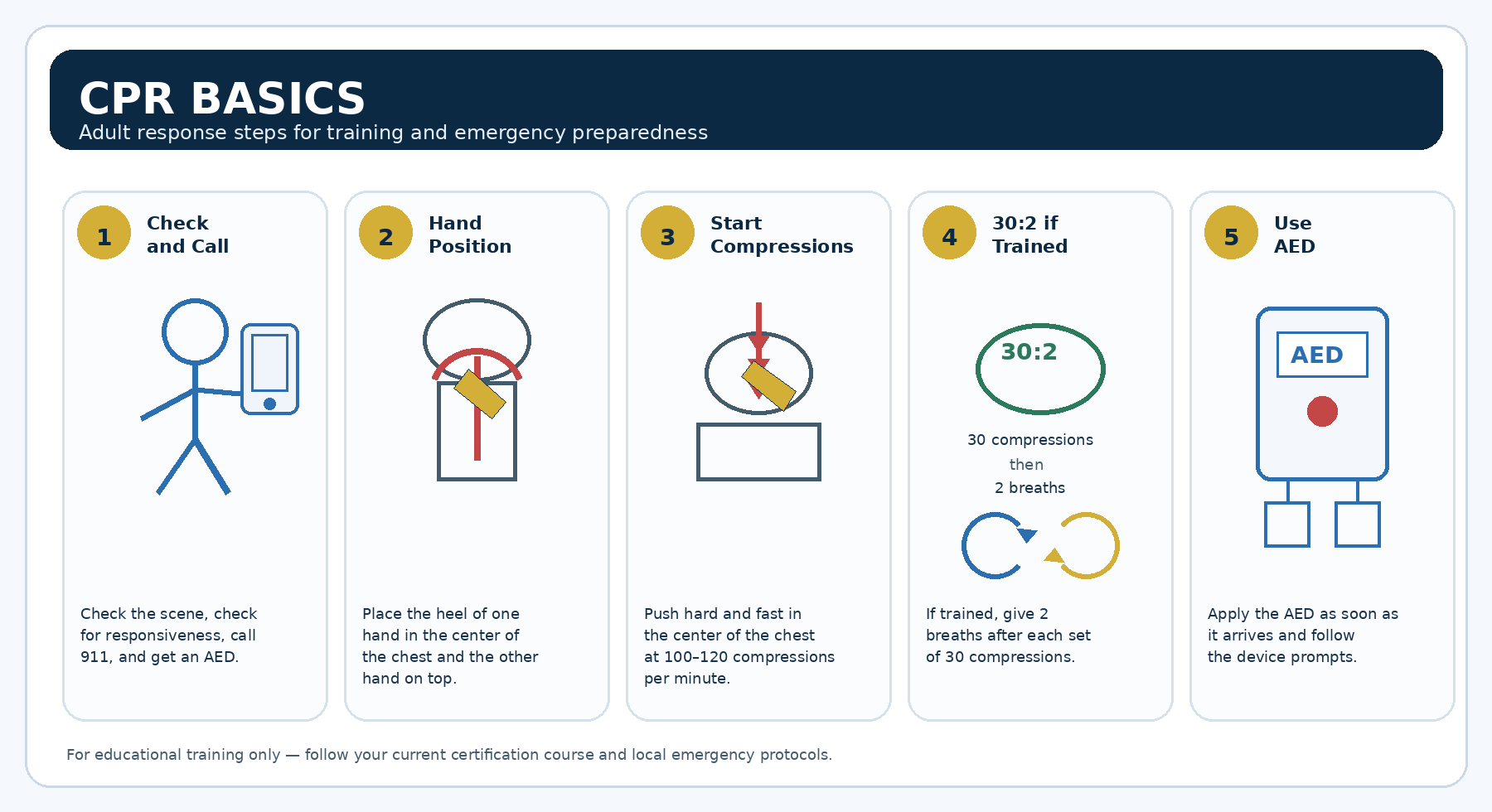
1. Assess
Make sure the scene is safe, check the person, and identify signs that require immediate emergency action.
2. Activate
Call for emergency medical services or direct another person to call. Send someone to retrieve an AED when available.
3. Begin CPR
Start high-quality chest compressions promptly and use the technique appropriate to the participant’s course level and the person’s age group.
4. Use the AED
Turn on the AED, follow its prompts, apply pads as trained, clear the person for analysis or shock, and resume CPR when directed.
Training Built for Retention
Demonstration
The instructor models key actions and explains common mistakes, priorities, and safety considerations.
Guided Practice
Participants perform skills repeatedly with feedback to improve technique and build muscle memory.
Scenarios
Short scenarios help learners practice recognizing an emergency, directing bystanders, using an AED, and staying focused.
Bring CPR Training to Your Organization
On-site group training can make it easier to prepare an entire team. Organizations can request a session for staff development, emergency preparedness, onboarding, annual safety initiatives, or community education. When contacting us, include the number of participants, training location, preferred dates, and whether a specific certification or employer-approved curriculum is required.
Learn CPR. Practice It. Be Prepared.
Request a CPR training session for yourself, your staff, or your community group.
Course scope, skills testing, certification, and renewal requirements depend on the curriculum selected. Confirm any employer or licensing requirement before enrolling.
CPR VISUAL GUIDE
Pictures & Diagrams Explaining CPR
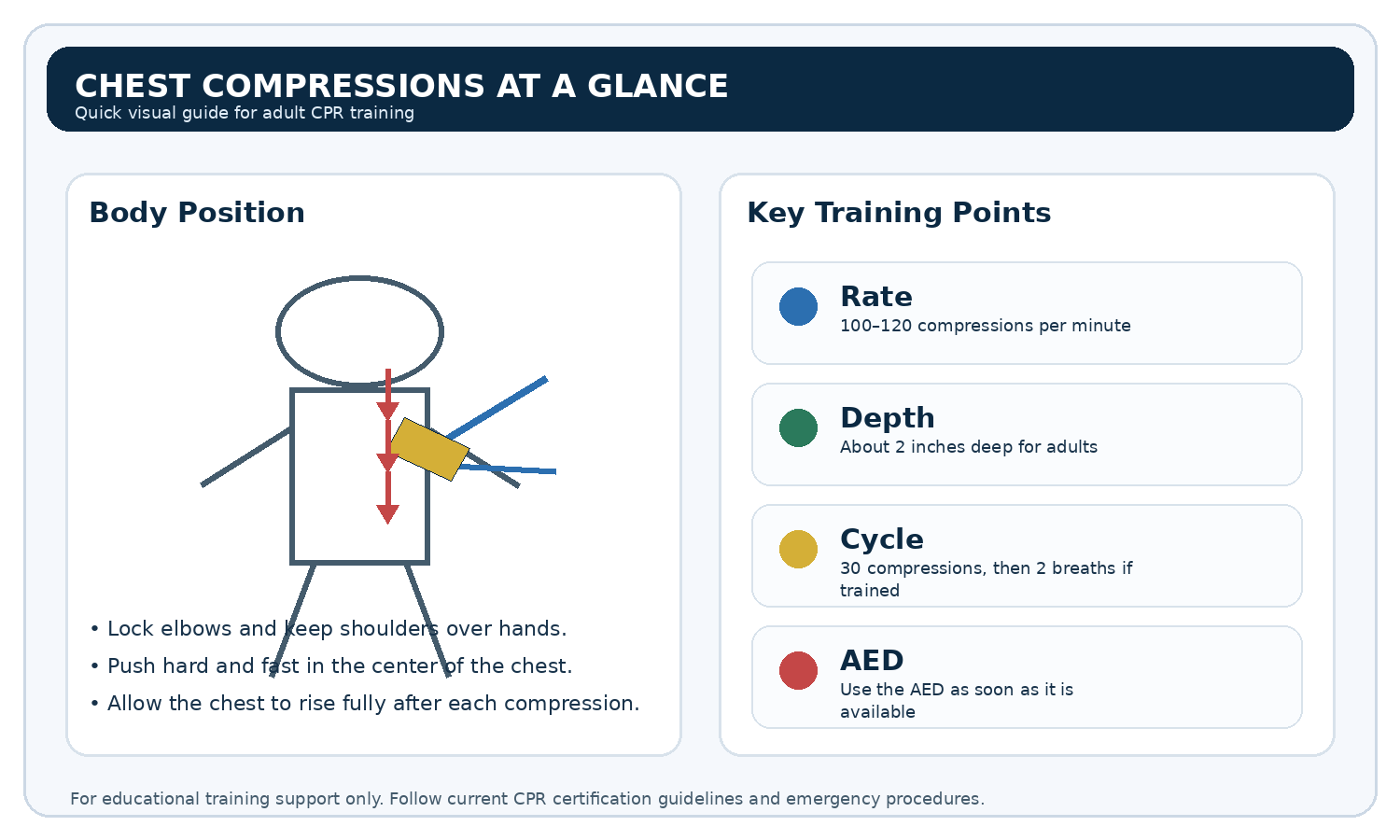
These visuals reinforce the hands-on CPR training content by showing the basic response flow, body position, compression cycle, and AED awareness. They are intended for educational support on the CPR Training page.
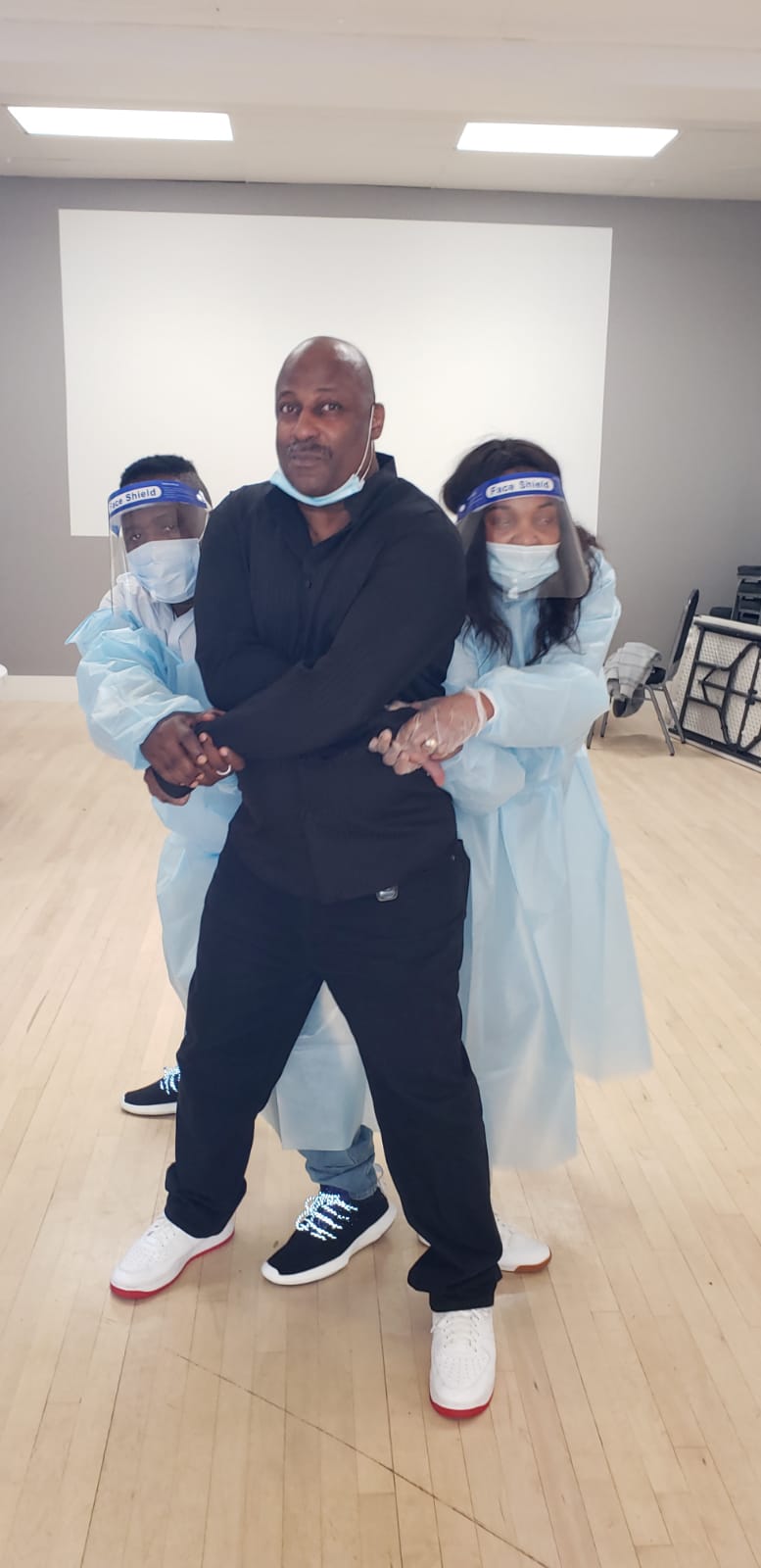
Hands-On CPR Practice
Participants learn how to recognize an emergency, call for help, begin chest compressions, and work confidently as part of an emergency response.
Important Training Reminder
These diagrams are for training support. Always follow your current certification course materials, instructor guidance, and local emergency procedures.